
Broad reach doesn’t automatically create qualified demand. Demand generation for medical devices requires a deliberate connection between what a product offers and the healthcare organizations most likely to consider it. The challenge is not simply attracting attention. It’s earning relevance across a complex business-to-business buying journey.
Medical device buyers weigh clinical priorities alongside organizational needs, and evaluations rarely happen in isolation. Marketing must make a product’s relevance clear without relying on broad claims or one-size-fits-all messaging. A thoughtful approach directs resources toward meaningful engagement, not activity that looks busy but reveals little about buyer interest.
This article explains how medical device companies can build that approach, from understanding distinct healthcare audiences to creating content and account strategies. It also covers how to assess campaign progress and build demand before prospects are ready to speak with sales. Use these principles to identify gaps and set a clearer direction for reaching the buyers who matter.
Key Takeaways
- Qualify prospects by clinical fit, organizational readiness, and their influence on purchasing decisions, not by contact volume alone.
- Shape content around each healthcare stakeholder’s priorities, and give every asset a clear distribution plan.
- Map priority accounts across facilities, service lines, and buying stakeholders so outreach reflects how decisions are made.
- Evaluate campaigns by whether they move relevant buyers toward the next stage, then refine targeting and messaging based on that progress.
- Build demand before buyers are ready to engage sales by making useful, evidence-led information easy to find and share.
1. How do you generate leads for medical device companies?
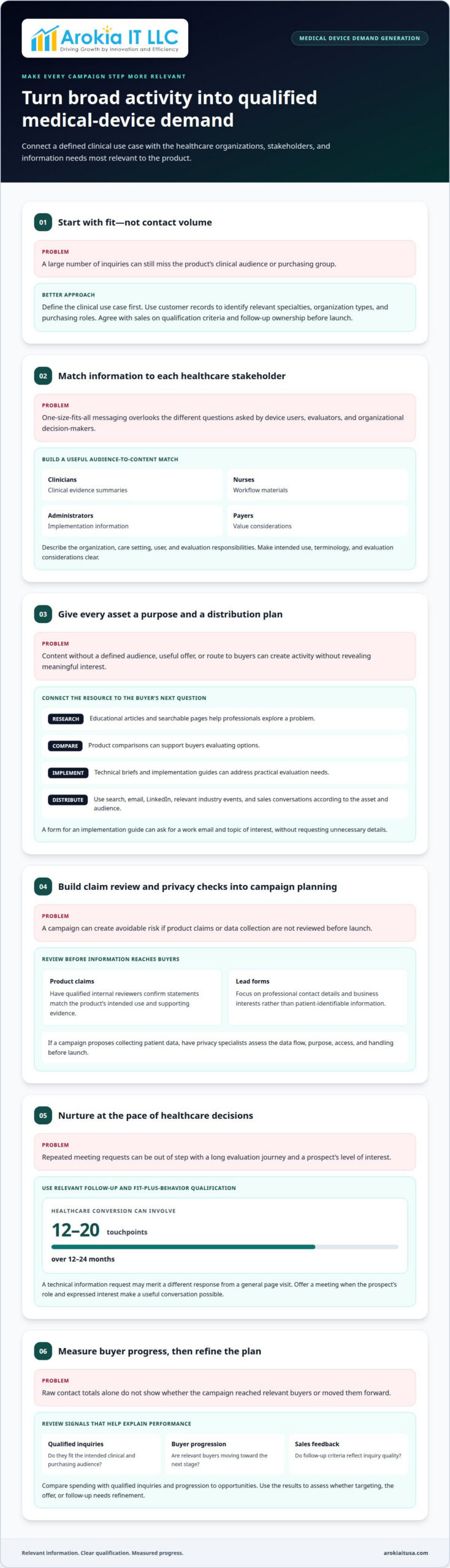
Medical device lead generation starts with a defined clinical use case and a reachable buyer group. Use customer records to identify relevant specialties, organization types, and purchasing roles. Then design a campaign that captures professional interest and gives sales enough context to assess whether an inquiry fits the product.
Which demand generation strategies work best for medical devices? Combine focused account outreach, search visibility, useful technical resources, and consistent follow-up. A product comparison, for instance, can help buyers evaluating options, while a clinical guide can support early research. The right mix depends on the product, audience, and sales process.
How do FDA regulations affect medical device marketing and demand generation? For an FDA-related campaign, include a review of product claims in the launch process. Have qualified internal reviewers confirm that each statement matches the product’s intended use and supporting evidence before it reaches buyers.
What HIPAA and privacy rules apply to medical device lead generation? Keep forms focused on professional contact details and business interests, rather than patient-identifiable information. If a campaign proposes collecting patient data, have privacy specialists assess the data flow, purpose, access, and handling before launch.
What content and channels generate leads for medical devices? Use technical briefs, product comparisons, educational articles, search, email, LinkedIn, and relevant industry events. A form offering an implementation guide can request a work email and topic of interest, giving follow-up a clear starting point without collecting unnecessary details.
Build the plan by defining the target use case, selecting priority organizations, choosing a useful offer, and agreeing on qualification criteria with sales. Set follow-up ownership before launch. A coordinated demand generation plan connects campaign activity to the next buyer step.
Appointment setting should follow qualification. Offer a meeting when a prospect’s role and expressed interest make a useful conversation possible. Healthcare conversion can involve 12-20 touchpoints over 12-24 months, so nurture with relevant follow-ups instead of repeating a meeting request after every interaction.
Score leads by fit and behavior, then review the results with sales. A technical information request may warrant a different response from a general page visit. Agree on what qualifies for follow-up, record sales feedback, and adjust criteria when inquiries repeatedly miss the intended clinical or purchasing audience.
Plan costs around audience specificity, channel mix, content needs, campaign duration, and follow-up capacity. Compare spending with qualified inquiries and progression to opportunities, not raw contact volume alone. This helps teams determine whether weak results stem from targeting, the offer, or follow-up.
2. Healthcare customer profiles and targeted content
A useful healthcare customer profile describes the organization, care setting, user, and evaluation responsibilities. Separate hospitals, physician offices, distributors, and individual consumers when their needs differ. Within a hospital, clinicians may focus on clinical evidence, while administrators assess operational fit. Clarify who uses the device, who evaluates it, and what information each role needs to move forward.
How do medical device buyers research and evaluate products? They seek information to assess clinical relevance, technical details, implementation needs, and organizational fit. They may compare product information with internal requirements and share useful evidence with colleagues. Make comparisons easier by explaining terminology, intended use, and evaluation considerations in a clear, accessible way.
Build a content matrix linking each audience to a specific question and format. Clinicians may need evidence summaries; nurses may value workflow materials; administrators may need implementation information; and payers may examine value considerations. A clinical evidence page and an operations-focused implementation guide, for example, address different concerns without forcing every reader through the same message.
Problem-awareness content helps audiences identify a challenge before evaluating products. An educational article might describe how a workflow creates a coordination issue, then outline factors a care team can examine. Make the discussion useful on its own. Introduce a device only when its capabilities relate directly to the problem and its role is described accurately.
Video can make complex material easier to review when it serves a defined purpose. A captioned product walkthrough can explain setup, while an expert presentation can clarify a clinical process. Keep information precise, provide captions and a transcript, and link the video to supporting technical material. A short video should complement, not replace, detailed evidence.
Match each asset to its intended audience. Searchable educational pages can help professionals researching a problem; LinkedIn can support professional discovery; and email can deliver resources related to subscribers’ expressed interests. Sales representatives can also share a technical guide during an account conversation, giving stakeholders a reference to circulate internally.
Trust depends on clear evidence and context. Identify the sources behind clinical statements, explain comparison criteria, and distinguish product information from general education. If a case example describes one facility’s experience, explain the setting and avoid implying that every organization will see the same outcome. This context helps clinical and administrative teams assess the information.
Use a content plan to connect audience needs, assets, and channels. For a medical equipment manufacturer, a clinician-focused evidence page might be paired with an administrator’s implementation guide, each distributed through an appropriate channel. A discussion about healthcare content priorities can help clarify which audience needs current materials address and where useful content gaps remain.
3. Account-based targeting across IDNs, ASCs, and service lines
Account-based targeting focuses outreach on organizations that match a device’s clinical use, purchasing structure, and service requirements. Build a priority account list by segment, such as integrated delivery networks (IDNs), ambulatory surgery centers (ASCs), hospitals, or specialty practices. Then map each account’s relevant service lines, such as orthopedics or cardiology, before planning outreach.
Healthcare purchases commonly involve 6-10 decision-makers across departments. A hospital evaluation may include clinicians, nursing leaders, procurement, finance, and administrators. Identify each person’s role in the decision rather than treating one contact as the entire account. A surgeon may influence clinical evaluation, while procurement manages purchasing steps.
Use account signals to distinguish priority organizations from poor-fit prospects. For an imaging device, a target account might have the relevant service line, an appropriate clinical team, and a purchasing process that supports evaluation. A smaller specialty practice may need a different message from a multi-facility IDN, even when both serve similar patients.
Engage stakeholders with materials suited to their concerns. Clinicians may need technical evidence; administrators may need workflow and implementation information; finance teams may need clearly explained cost considerations. A case study can show how a device addressed a specific operational challenge, but its context should be clear and must not imply identical results elsewhere.
Include wellness practitioners in the target audience only when the device’s intended use and buyer profile make them relevant. A product designed for a wellness practice, for example, should address that practice’s workflow and purchasing role. A device intended for hospital-based care calls for outreach to the clinical and administrative teams involved in that setting.
Account plans should coordinate contacts, messages, and next steps. For each IDN or ASC, record the service line, relevant stakeholders, prior engagement, and open questions. Marketing and sales can then sequence outreach around the account’s evaluation process instead of sending the same message to every contact.
Measure account progress through meaningful movement, such as a clinical discussion, a request for technical information, or engagement from another decision-maker. These signals help distinguish account activity from a developing pipeline. The aim is to turn relevant interest into a coordinated evaluation, not simply increase the number of names in a database.
A structured account-based targeting approach aligns account selection, stakeholder mapping, and tailored engagement. Review the target list when sales feedback or new information changes an account’s clinical fit, purchasing readiness, or service-line priorities. This keeps outreach focused as opportunities develop.
4. Evaluating and refining campaigns
Set the measurement framework before launching a medical device campaign. Define the audience, clinical use case, conversion event, and business outcome in writing. A campaign for imaging equipment, for example, might track qualified inquiries, technical discussions, and opportunities accepted by sales. These measures reveal more than impressions or clicks alone.
Use a funnel view to assess progress. Track whether target accounts see relevant messages, engage with clinical content, request product information, and advance to a sales conversation. A hospital buyer who downloads a technical guide may show early interest, while a request to discuss implementation signals a different stage. Record each action consistently.
Reaching the right audience matters more than maximizing traffic. Review whether leads match the intended clinical specialty, organization type, and purchasing role. If a campaign attracts students while sales needs hospital decision-makers, revise audience criteria, search terms, or placement. If clinical staff engage but administrators do not, tailor follow-up materials to operational concerns.
Measure return on investment by comparing campaign costs with outcomes the business can attribute to marketing. Include media, content, and campaign execution expenses. Then compare qualified opportunities and resulting revenue with that investment. Keep assumptions visible, especially when sales cycles span multiple reviews.
Attribution requires care. A prospect may discover a device through search, return through email, and later speak with sales after an event. A single-touch report might credit only the final interaction. Review the account timeline alongside relevant campaign touches, then distinguish opportunities sourced by marketing from those marketing influenced.
Refine one meaningful variable at a time. For a clinical campaign, compare two audience segments or message approaches while keeping the offer consistent. Review engagement quality, qualified inquiries, and sales feedback before reallocating effort. Changing the audience, creative, and landing page together makes it difficult to identify what affected results.
Campaign reporting should connect activity to decisions. A regular review can examine target-account engagement, lead quality, opportunity movement, and stalled follow-up. If a clinical guide generates relevant engagement but few conversations, test a more useful next step, such as a technical discussion. If leads fail qualification, tighten targeting before increasing spend.
Marketing and sales should agree on what qualifies as an opportunity and how promptly each lead receives follow-up. Use CRM records to compare campaign source, account fit, and progression. A shared view helps teams base investment on evidence, improve their reach to priority buyers, and avoid mistaking a temporary rise in clicks for lasting commercial progress.
5. Medical device demand creation
Lead generation captures existing interest; demand creation helps suitable buyers recognize a need before they actively evaluate products. That distinction matters in healthcare, where purchasing decisions can take 12-24 months. A demand strategy should build understanding across that longer journey, not rely on a single campaign or immediate demo request.
Start with the clinical or operational problem the device addresses. Explain, for example, how a specific workflow challenge affects a care team, then describe evaluation criteria buyers can use. This gives prospects useful context before product capabilities are introduced. Tie each educational asset to a real use case and a clearly defined audience.
Map content to the questions buyers ask as interest develops. Early-stage prospects may need an explanation of the problem and available approaches. Later, a clinical team may want technical evidence, while administrators assess implementation requirements. A sequence of articles, guides, and product information can support each stage without pushing every prospect toward the same action.
Search visibility helps buyers find educational material while researching clinical or procedural topics. Begin with a search audit, then identify relevant terms reflecting the problem, specialty, and device category. Create clear pages around those needs. A page focused only on a product name may miss prospects who understand their challenge but haven’t identified a solution.
Distribute demand-building content where its intended audience can use it. A clinical explainer can support organic search; a technical guide can help sales conversations; an email can deliver a relevant next resource to an interested subscriber. Match the channel to the asset and buyer stage, then make the next useful step clear.
Effective demand creation earns attention through substance, not promotional volume. A comparison guide should explain its criteria; an educational webinar should answer a defined clinical or operational question. Keep product claims accurate and supported. Clear evidence and context give buyers material to share with colleagues during internal evaluation.
Measure progress beyond immediate lead volume. Track whether target accounts return to relevant resources, engage with more content, or advance toward a qualified discussion. Review these signals alongside sales feedback. If prospects engage with problem-focused content but don’t progress, refine the next asset or call to action instead of simply increasing reach.
Build the strategy as a connected system: define the buyer problem, create useful resources, distribute them through relevant channels, and measure movement toward opportunities. This helps medical device companies build interest before prospects are ready to purchase, while giving sales teams better context when conversations begin.
Arokia IT: Demand Generation
Arokia IT helps medical equipment manufacturers build demand generation programs that connect buyer research with qualified sales opportunities. Its services include account-based marketing (ABM) to focus outreach on priority healthcare organizations, and AI Search & GEO to help relevant content appear in search and generative platforms.
Turn to Arokia IT when your team needs a coordinated approach to reaching clinical and business stakeholders, nurturing interest, or connecting campaign activity to pipeline priorities. Arokia IT can align medical equipment marketing, targeted accounts, and useful content with your product’s market and buying journey.
Make your next growth decision count
Medical device growth depends on more than campaign activity. It depends on building a system that adapts as clinical priorities, purchasing processes, and buyer questions change. Treat demand generation for medical devices as a long-term commercial capability that helps your organization learn from market response and make disciplined choices about where to invest next.
A practical next step is to identify the gap with the greatest impact on your pipeline. It might be limited visibility among relevant buyers, disconnected marketing and sales activity, or content that doesn’t support internal evaluation. Focus on that constraint first, define what progress looks like, and use the result to guide the next improvement. Clear priorities direct effort toward the opportunities that matter.
With a focused plan and consistent learning, your team can build stronger momentum for the next stage of growth.
Frequently Asked Questions
How do you generate leads for medical device companies?
Generate leads by giving relevant professionals a useful reason to identify themselves, such as requesting a technical brief or product evaluation. Ask the form to capture business contact details and the specific information requested. Then route each inquiry to the appropriate sales owner, recording its source, topic, and follow-up status. Someone requesting implementation details, for example, may need a different response from someone exploring general product information.
What makes healthcare lead generation different?
Healthcare lead generation must account for clinical context and organizational decision processes, not just individual interest. A clinician may assess whether a device fits a care setting, while an administrator may focus on operational considerations. Tailor content and follow-up to those distinct responsibilities. Don’t treat patient-facing interest as professional purchasing intent, and keep campaign language accurate, clear, and relevant to the intended healthcare audience.
What should I do next?
Choose one product, one well-defined buyer segment, and one campaign objective before expanding activity. Write a brief that names the audience, the problem the product addresses, the conversion action, and who will review results. A campaign might focus on a specific clinical specialty and measure requests for technical information. Starting narrowly makes early feedback easier to interpret.
How can medical device companies identify and target healthcare decision-makers?
Start with the organization’s relevant service line, then identify roles involved in clinical evaluation, operations, procurement, and budget approval. Use professional biographies, organization directories, and sales records to understand responsibilities. Validate relevance through stated duties and prior interactions, not job title alone. A clinical specialist at one facility may influence evaluation, while another contact with the same title may not.
How should medical device companies measure demand generation ROI and lead quality?
Compare campaign investment with attributable revenue or qualified pipeline, and document how attribution is assigned. To assess lead quality, track whether sales accepts the inquiry, whether the account fits the intended market, and whether a substantive next step follows. Review these measures together: a high volume of inquiries can still signal weak performance if few fit the device’s intended buyers or progress into active opportunities.
What is the average cost per lead for medical device marketing in the US?
To calculate a planning figure, divide campaign spend by the leads generated, then assess whether those leads meet your qualification criteria. The result depends on audience specificity, channel selection, product complexity, content needs, and follow-up effort. Compare like with like: a broad information request and a qualified inquiry from a relevant healthcare organization do not represent equivalent lead value.
How do demand generation strategies differ for B2B and direct-to-consumer medical devices?
B2B strategies focus on professional audiences and organizational purchasing, so campaigns often support evaluation across clinical, operational, and procurement roles. Direct-to-consumer marketing addresses individual buyers and requires a different audience, message, and customer journey. Medical device companies should align each campaign with the product’s intended audience and sales model. A business-focused marketing plan is suited to manufacturers selling through healthcare organizations, not consumer retail.