
Your go-to-market strategy is hemorrhaging capital every time an SDR calls a prospect whose current tech stack makes your solution obsolete. Most revenue leaders accept a certain margin of error in their data, yet they remain frustrated by low connect rates and stagnant pipelines. It’s a systemic failure. Identifying the best technographic data platforms for b2b targeting isn’t just a software procurement task; it’s a strategic necessity to ensure your outreach aligns with the actual digital infrastructure of your prospects.
You need precision to transform a bloated lead list into a lean, high-conversion pipeline. This roundup provides the strategic clarity required to eliminate GTM waste and accelerate revenue through data-driven targeting. We’ll examine the high-precision platforms essential for 2026, focusing on real-time signal accuracy and competitive intelligence. By the end of this analysis, you’ll have a blueprint for selecting the tools that drive predictable growth and professional-grade sales enablement. We’ll bridge the gap between stale data and a verified, 90-day pipeline forecast.
Key Takeaways
- Learn why mapping a prospect’s hardware and software stack is critical to eliminating GTM waste and improving SDR connect rates in 2026.
- Discover how the best technographic data platforms for b2b targeting provide the granular spend and installation intelligence needed to outmaneuver competitors.
- Establish a minimum data refresh threshold of 30 days to ensure your sales enablement content reaches accounts with compatible technology environments.
- Integrate technographic signals into your 90-day pipeline forecast to achieve predictable revenue growth and organizational alignment.
- Shift from static data collection to strategic revenue execution by embedding technographic insights directly into your account-based marketing framework.
Eliminating GTM Waste with Precision Technographic Data
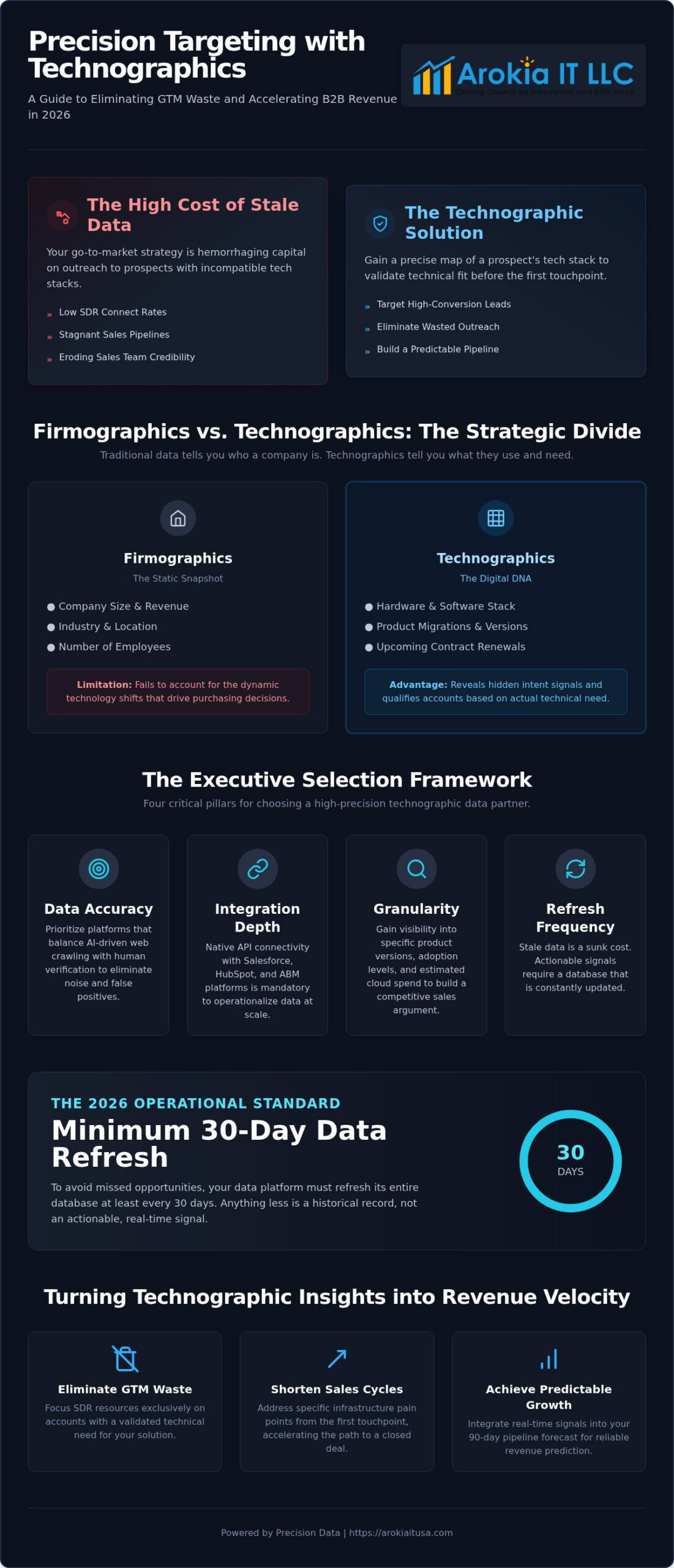
Technographic data provides the granular map of a prospect’s hardware and software stack. It serves as the diagnostic tool for identifying which accounts are technically capable of utilizing your solution and which are fundamentally disqualified by their existing infrastructure. In an era of tightening budgets, relying on the best technographic data platforms for b2b targeting is the only way to ensure your go-to-market (GTM) efforts aren’t directed at ghosts. Traditional firmographics offer a static snapshot of a company’s size and location. They fail to account for the dynamic technological shifts that actually drive purchasing decisions in 2026.
The financial cost of stale data is a silent killer of revenue growth. When sales development representatives (SDRs) chase accounts with incompatible tech stacks, the result is more than just a low connect rate. You are actively eroding the credibility of your sales team and burning through your customer acquisition budget on leads that will never convert. Precision technographics bridge the gap between raw marketing leads and a sales-ready pipeline by validating technical fit before the first touchpoint occurs.
Firmographics vs. Technographics: The Strategic Divide
A company’s revenue figure doesn’t dictate its software compatibility. A billion-dollar enterprise might have the capital to purchase your solution, but if their current digital infrastructure is built on a competing architecture, the sales cycle is dead on arrival. Technographics reveal hidden intent signals that firmographics miss, such as recent product migrations or upcoming contract renewals. Technographic data is the DNA of a company’s digital infrastructure. By analyzing these signals, you can identify accounts that are not only qualified by size but are also in a state of flux that necessitates your specific solution.
The Impact on Industrial B2B Sales Cycles
In the manufacturing and industrial sectors, sales cycles are notoriously long and high-stakes. These organizations often rely on complex legacy systems that represent significant capital investments. Identifying which firms are running outdated hardware or fragmented software allows your team to position your offering as a necessary modernization. Using the best technographic data platforms for b2b targeting ensures that your outreach focuses on these specific pain points. This level of data precision is what ultimately accelerates the ABM process. It transforms generic marketing into a targeted strike that addresses the prospect’s actual environment, significantly shortening the path from initial contact to a closed-won deal.
Evaluating Technographic Platforms: The Executive Selection Framework
Selecting a data partner is a high-stakes decision that dictates the efficiency of your entire revenue engine. When identifying the best technographic data platforms for b2b targeting, executive leadership must look beyond superficial dashboards to evaluate the underlying mechanics of data collection. Precision isn’t optional. It’s the difference between a high-velocity pipeline and a list of dead ends. A platform that fails to provide a transparent audit trail for its data provenance is a liability, not an asset.
Effective evaluation requires a framework built on four critical pillars of data integrity:
- Data Accuracy: Prioritize platforms that balance AI-driven web crawling with human verification. This dual-layer approach eliminates the noise and false positives inherent in purely automated scrapes.
- Integration Depth: Native API connectivity with Salesforce, HubSpot, and specialized ABM platforms is mandatory. Data that exists in a silo cannot be operationalized at scale.
- Granularity: Surface-level insights are insufficient for 2026. You need visibility into specific product versions, adoption levels, and estimated cloud spend to build a truly competitive sales argument.
- Refresh Frequency: Stale data is a sunk cost. If a platform isn’t refreshing its database at least every 30 days, it’s providing a historical record rather than an actionable signal.
The 2026 Standard for Data Refresh Rates
The market moves faster than your database. Relying on cached technographic snapshots in a rapidly evolving ecosystem leads to missed windows of opportunity where a prospect is actively migrating away from a competitor. Near-real-time data is now the operational standard. To stay ahead, look for platforms that integrate B2B SEO and search signal intelligence. These signals identify accounts researching new solutions before the installation even appears in a public crawl, allowing you to strike while the intent is highest.
Compliance and Security in Global Targeting
Enterprise-grade targeting requires enterprise-grade security. Navigating international data privacy regulations is non-negotiable for US-based firms with global footprints. You must demand SOC 2 Type II compliance from your providers. Secure data handling isn’t just a legal requirement; it’s a foundational element of your demand generation strategy. Without a transparent audit trail, your targeting lacks the professional authority required for high-stakes enterprise sales. If you’re struggling to vet your current data stack, it may be time to consult with a strategic partner to audit your pipeline integrity.
Top 5 Technographic Data Platforms for B2B Enterprise Targeting
Intelligence is only as valuable as its precision. Identifying the best technographic data platforms for b2b targeting requires a nuanced understanding of how data is sourced, validated, and operationalized. While many providers claim to offer tech stack insights, only a few deliver the depth required for high-stakes enterprise sales. These platforms serve as the raw material for your revenue engine, but their utility depends on your specific industry focus and technical requirements.
The following five platforms represent the current gold standard for technographic intelligence in the US market. To maximize their value, pairing technographic signals with the best sales intelligence tools for B2B contact data ensures your reps have both the technical context and the verified executive contacts needed to execute high-precision outreach:
- HG Insights: The definitive leader for tracking complex IT infrastructure, hardware spend, and cloud budget allocation. It’s particularly effective for industrial sectors where hardware legacy systems dictate purchasing cycles.
- 6sense: A powerful hybrid that combines technographics with predictive intent. It uses stack data to identify accounts that are most likely to buy based on their current digital maturity.
- BuiltWith: The unrivaled source for web-based technology tracking. It provides an exhaustive historical record of every script, framework, and plugin a prospect has utilized over time.
- SalesIntel: A top choice for teams that prioritize accuracy over sheer volume. They utilize a human-verification process to ensure their technographic signals are current and reliable for the US market.
- ZoomInfo: The comprehensive incumbent. It offers massive breadth across both technographics and firmographics, making it a reliable foundation for broad market coverage.
- Arokia IT: The strategic execution layer. While the platforms above provide data, Arokia IT translates these signals into a 90-day pipeline forecast, ensuring that technographic intelligence leads to tangible revenue velocity.
Best for Predictive Intent: 6sense and Demandbase
Propensity to buy is no longer a guessing game. Platforms like 6sense and Demandbase use technographic data to fuel AI-driven scores that predict when an account is entering a buying window. This synergy between stack data and AI search optimization allows you to capture interest at the earliest possible stage. For enterprise organizations, this means your sales enablement content is delivered precisely when the prospect’s tech stack reaches a critical migration point. Mid-market organizations looking to operationalize these signals should also evaluate the leading marketing automation platforms for mid-market B2B to ensure technographic triggers translate into automated, revenue-generating workflows.
Best for Specialized Industrial Data: HG Insights
Industrial marketing requires a level of granularity that web-focused tools often miss. HG Insights excels here by analyzing IT budget allocation as a primary targeting signal. They map legacy hardware and complex on-premise infrastructure that BuiltWith’s web-focused approach cannot see. If your goal is to identify accounts ripe for modernization, HG Insights provides the deep-tier intelligence necessary to validate those opportunities before you commit GTM resources.
Integrating Technographics into Your 90-Day Pipeline Forecast
Data collection is a cost center; revenue execution is a profit center. Most organizations treat technographic intelligence as a static library of information rather than a dynamic fuel for their sales engine. At Arokia IT, we view these signals as the primary input for a disciplined 90-day pipeline forecast. By shifting the focus from who has what to what they’ll buy next, you transform raw data into a predictable growth model. This transition requires a systematic approach to account segmentation based on stack maturity and technical compatibility.
Shortening the sales cycle starts with elimination. You can’t afford to waste GTM resources on accounts that require a fundamental infrastructure overhaul before they can even consider your solution. By identifying the best technographic data platforms for b2b targeting, you can filter out incompatible accounts at the top of the funnel. This ensures your sales team only engages with high-probability prospects, effectively removing the technical friction that often stalls mid-funnel deals.
The Mechanics of a Data-Driven Forecast
Accuracy in forecasting depends on how you weight technographic signals within your lead scoring model. An account using a direct competitor’s legacy system carries a different weight than one with a complementary, modern stack. Linking this intelligence to your content marketing strategy allows you to deploy assets that address specific technical pain points before the first sales call. Technographic precision reduces pipeline variance by providing a clear view of the technical barriers to entry. This granular oversight allows leadership to predict revenue with a level of confidence that generic firmographics can’t provide.
Sales Enablement: Arming Reps with Stack Intelligence
Your sales development representatives (SDRs) need more than just a name and a number. They require pre-call intelligence that identifies a prospect’s current technical limitations and displacement opportunities. When a rep knows exactly which version of a competitor’s software is being used, they can craft messaging that highlights specific, known deficiencies. This level of personalization is the backbone of effective lead nurturing and multi-channel engagement. Utilizing the best technographic data platforms for b2b targeting ensures that your reps aren’t just making calls; they’re conducting high-stakes consultations based on verified data. Complementing this stack intelligence with validated B2B contact data from elite sales intelligence tools gives your SDRs the complete picture needed to engage decision-makers with authority.
Strategic ABM: Turning Technographic Insights into Revenue Velocity
Technographic data is a tool. Strategic account-based marketing (ABM) is the discipline that gives that tool its value. Simply identifying the best technographic data platforms for b2b targeting is insufficient if your organization lacks the framework to operationalize those insights. High-stakes B2B firms need more than a data subscription to drive growth. They require a clinical approach to synthesizing data, AI search intelligence, and sector-specific expertise to transform raw signals into revenue velocity. Selecting the best technographic data platforms for b2b targeting is only the beginning of a larger journey toward organizational alignment.
The transition from generic demand generation to high-precision account-based execution is the defining characteristic of market leaders in 2026. While competitors are still blasting broad segments with semi-relevant messaging, sophisticated firms are using stack data to orchestrate surgical strikes on accounts with the highest propensity to convert. This shift moves your GTM team away from a “spray and pray” methodology and toward a model of total oversight and strategic mastery. It’s about ensuring every marketing dollar spent is anchored to a verified technical fit.
Beyond the Dashboard: The Need for Strategic Partnership
Most firms fail to see a tangible ROI from expensive data platforms because they lack the strategy to bridge internal silos. A dashboard full of technographic signals is useless if your sales and marketing teams aren’t aligned on how to interpret them. This is where industrial marketing expertise becomes a critical differentiator. Interpreting complex hardware and software dependencies requires a seasoned consultant who understands the granular pains of the sales process. You don’t just need more data; you need the strategic confidence to act on it with precision and accountability.
Next Steps: Auditing Your Current Data Strategy
Predictable growth is built on the elimination of waste. Your first step should be a thorough audit of your current data coverage to identify gaps where stale information is stalling your SDR connect rates. Arokia IT specializes in bridging these gaps by anchoring technographic precision to tangible financial outcomes. You can gain a massive competitive advantage by aligning your tech stack insights with a systematic revenue engine. To move from data collection to execution, request a 90-day pipeline forecast assessment today. This diagnostic will reveal the true health of your funnel and provide the blueprint for accelerated, data-driven growth.
Accelerating Your Revenue Engine with Data Precision
Identifying the best technographic data platforms for b2b targeting is a strategic imperative for any leader seeking to eliminate GTM waste and drive predictable growth. You’ve seen how precise stack insights shorten sales cycles and arm your reps with pre-call intelligence. It isn’t just about owning the data; it’s about the methodology used to operationalize it. A static list of technologies is a cost center, but a dynamic, verified pipeline is a financial asset.
Arokia IT specializes in this transition. We provide 90-day predictable revenue forecasting by anchoring technographic signals to tangible outcomes. Our expertise in high-stakes industrial marketing ensures your strategy accounts for complex legacy systems that generic tools often miss. We leverage AI-driven GEO and search optimization to capture intent at the earliest possible stage, giving you a distinct advantage in the US market.
Don’t let your pipeline stall on incompatible leads or stale data. Take control of your revenue velocity and build a more resilient, data-driven GTM engine today.
Frequently Asked Questions
What is technographic data and how does it differ from firmographics?
Technographic data provides a granular map of a prospect’s digital infrastructure, including hardware, software, and cloud spend. It differs from firmographics, which focus on company size, location, and annual revenue. While firmographics tell you if a company is large enough to buy, technographics tell you if they’re technically compatible. This distinction is critical for eliminating GTM waste and ensuring your sales enablement content reaches accounts with the correct digital DNA.
How do technographic data platforms collect their information?
The best technographic data platforms for b2b targeting utilize a multi-layered approach to collection. Most platforms deploy AI-driven web crawlers to identify scripts, frameworks, and plugins on public-facing websites. Advanced providers go deeper, analyzing job descriptions for required skills, scanning public financial disclosures, and utilizing human-verification teams. This rigorous methodology ensures that the signals captured are current and reflect the actual operational state of the prospect’s technology environment.
Which technographic platform is best for small to mid-sized B2B companies?
For small to mid-sized B2B companies, the choice often depends on the specific sales motion. BuiltWith is unrivaled for tracking web-based technologies and offers accessible entry points for focused searches. SalesIntel is another strong contender for US-based firms, providing human-verified data that minimizes the risk of stale leads. These platforms allow smaller teams to execute high-precision targeting without the massive overhead associated with enterprise-grade predictive suites. To ensure these data signals are fully activated, pairing them with the leading marketing automation platforms for mid-market B2B in 2026 creates a connected stack capable of delivering predictable revenue growth.
Can technographic data help in predicting B2B sales cycles?
Technographic data is a primary input for predicting sales cycles. By identifying legacy systems that are reaching the end of their lifecycle or detecting the installation of complementary software, you can pinpoint exactly when a prospect enters a buying window. Arokia IT utilizes these signals to build a 90-day pipeline forecast. This approach transforms static data into a dynamic revenue engine, allowing for more predictable growth and strategic organizational alignment.
How often should technographic data be refreshed to remain accurate?
Accuracy in high-stakes GTM requires a refresh rate of at least 30 days. Technology stacks evolve rapidly; relying on data that is several months old leads to wasted ad spend and low SDR connect rates. Near-real-time updates are the gold standard for 2026. Frequent refreshes allow your team to capture window of opportunity accounts during critical migrations or renewals, ensuring your outreach remains relevant to the prospect’s current technical reality.
Is technographic data compliant with GDPR and CCPA regulations?
Leading technographic platforms maintain strict compliance with GDPR and CCPA by focusing on company-level signals rather than personally identifiable information. They typically collect data from public-facing digital footprints and business-related records. When selecting a partner, look for SOC 2 Type II compliance and transparent data provenance. These certifications ensure that your demand generation framework remains legally sound while delivering the deep targeting insights required for professional-grade enterprise sales.
What is the average ROI of implementing a technographic data platform for ABM?
The ROI of technographic data is measured through the elimination of GTM waste and increased revenue velocity. While specific returns vary by industry, firms often see a reduction in sales friction by filtering out technically incompatible accounts early. This precision allows marketing budgets to be concentrated on high-probability targets. By integrating these insights into a structured ABM framework, organizations can achieve more predictable revenue growth and higher conversion rates across the entire sales funnel.
How does technographic data integrate with existing CRM systems like Salesforce?
Integration is typically handled through native APIs or bi-directional syncs that enrich existing account records. The best technographic data platforms for b2b targeting connect directly with Salesforce and HubSpot, allowing stack attributes to trigger automated workflows. This connectivity ensures that your SDRs have real-time pre-call intelligence within their primary workspace. Seamless integration is essential for operationalizing data and arming your team with the competitive displacement intelligence needed to win high-stakes deals.